
All I wanted was nicer lights
Two paper festival lanterns came with sad little battery candles. Replacing them turned into my first real electronics project, and somehow it ended with a circuit board at a factory.
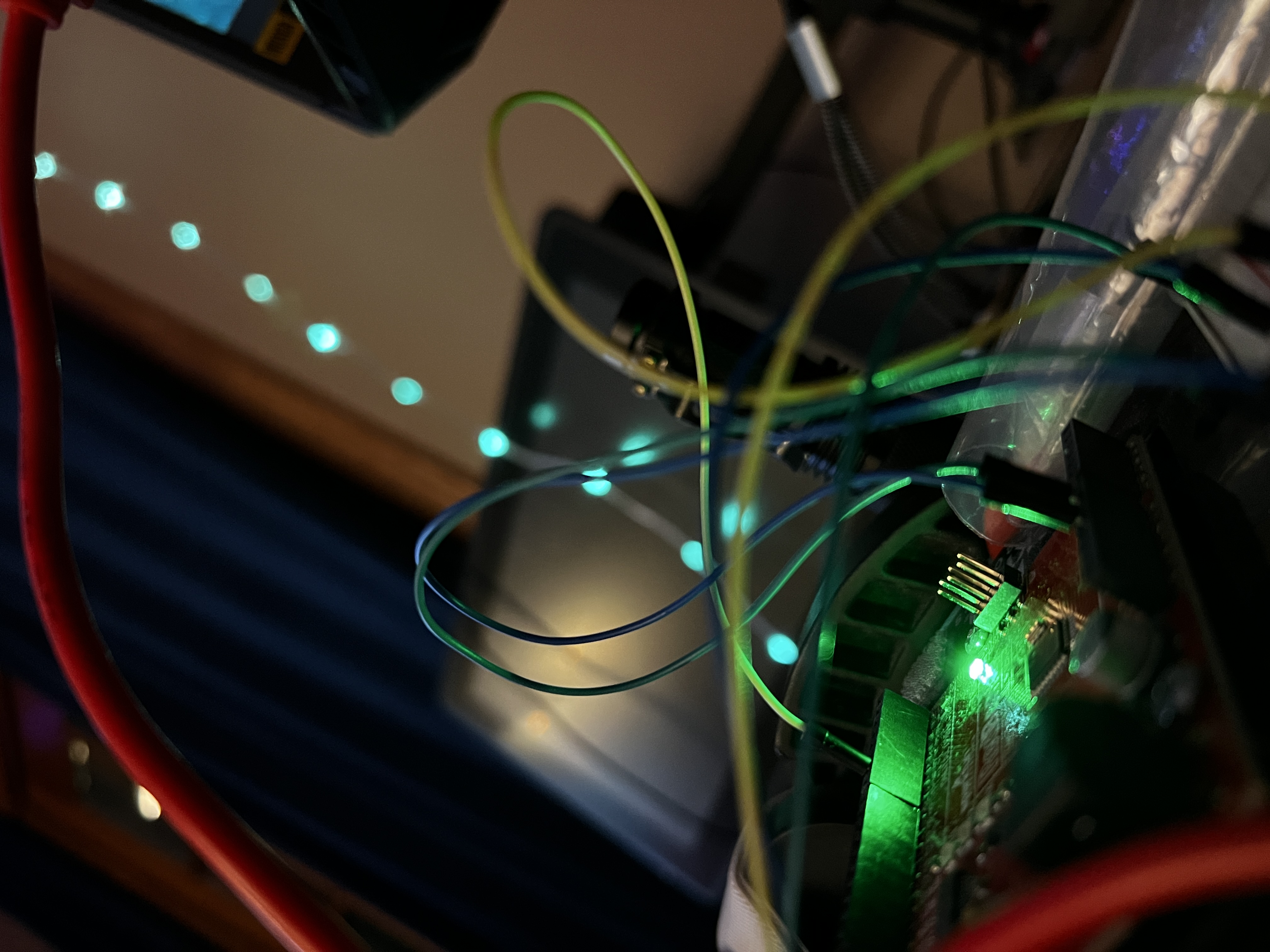
We picked up two paper lanterns at a lantern festival. Gorgeous things, right up until the sun goes down and you switch them on. Each one has a sad little battery candle inside, the kind with a switch you flick by hand, throwing about as much light as a phone screen at two percent. I had wanted to fix that for a while.
But nicer lights was the excuse. The real itch was this: I have spent almost twenty-five years making video games. I know how to take an idea and turn it into a thing on a screen. I have made plenty of real-world things too, over the years. But never one with a circuit in it, never anything that needed electronics to work at all. Two paper lanterns felt like a small, safe place to find out what that takes.
No instructions this time
I already owned a soldering iron. I had tinkered before, put together a few hobby kits, the kind where the instructions tell you exactly which leg goes in which hole. What I had never done was point any of it at an idea that was only mine. No kit, no diagram, no answer key, just “I want the lights to do this” and a box of parts. That part was new, and it was a different kind of nervous.
I do still love how solder behaves. A metal that is liquid one second and solid the next, going hard the instant you lift the iron away. I melt little beads for longer than any job needs, purely because it is neat. I bought a fan with a filter early on too, because good lord, the fumes.
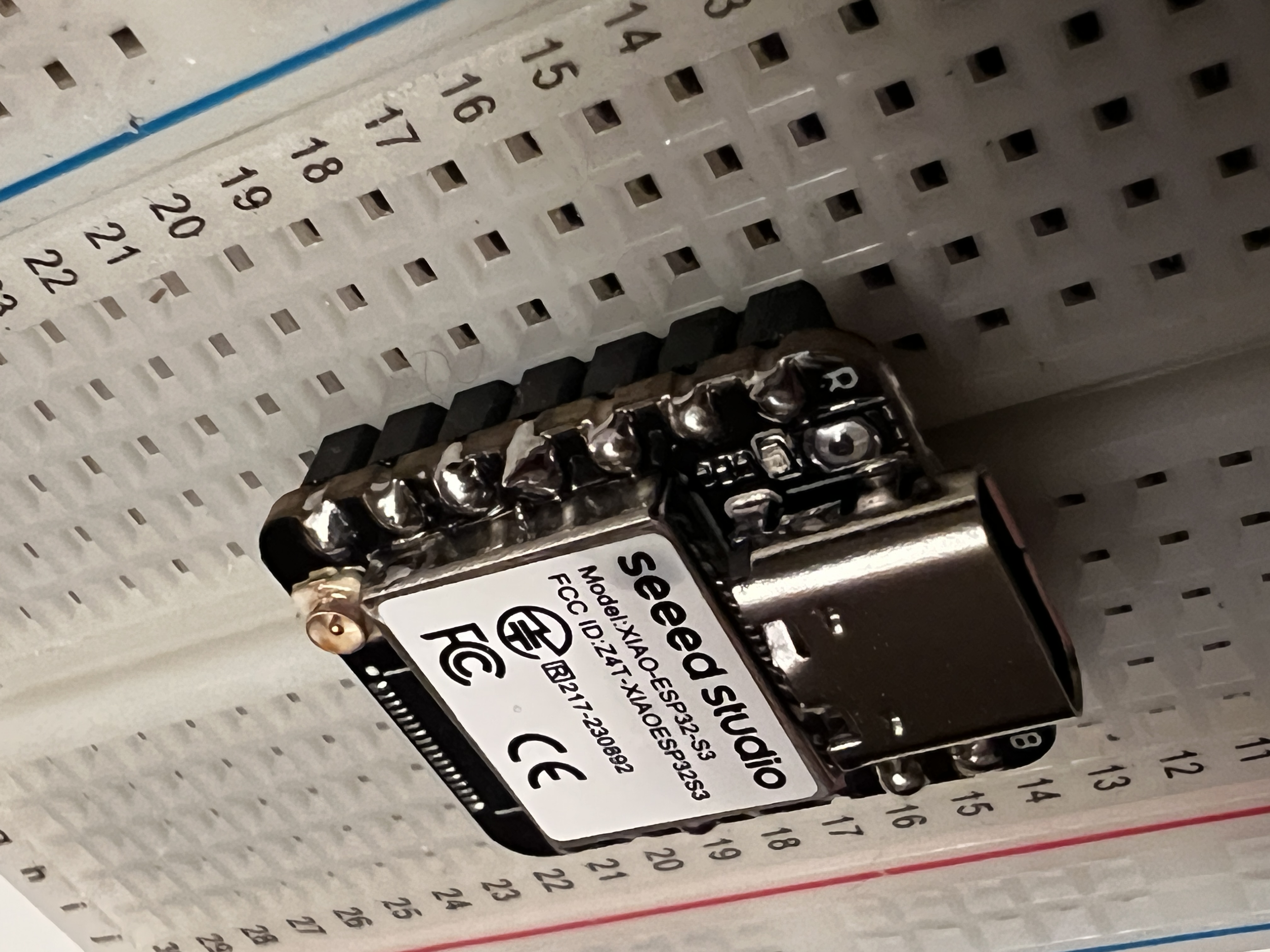
The plan was simple on paper. A tiny microcontroller, a strip of addressable LEDs (the kind where you can talk to every light on its own), and the two of them strung up inside the lanterns in a loose spiral. The part I still do not love is running the wire up the bamboo pole each lantern hangs from. One day I will find a hollow pole and thread it through like a civilized person. For now it is taped, and it is honest.
The first time those lights did exactly what I told them to, in the color and the order I asked for, I made an involuntary noise. Something I had wired up with my own hands, answering to me instead of to a kit’s instructions. It felt like getting away with something.
It stopped being simple
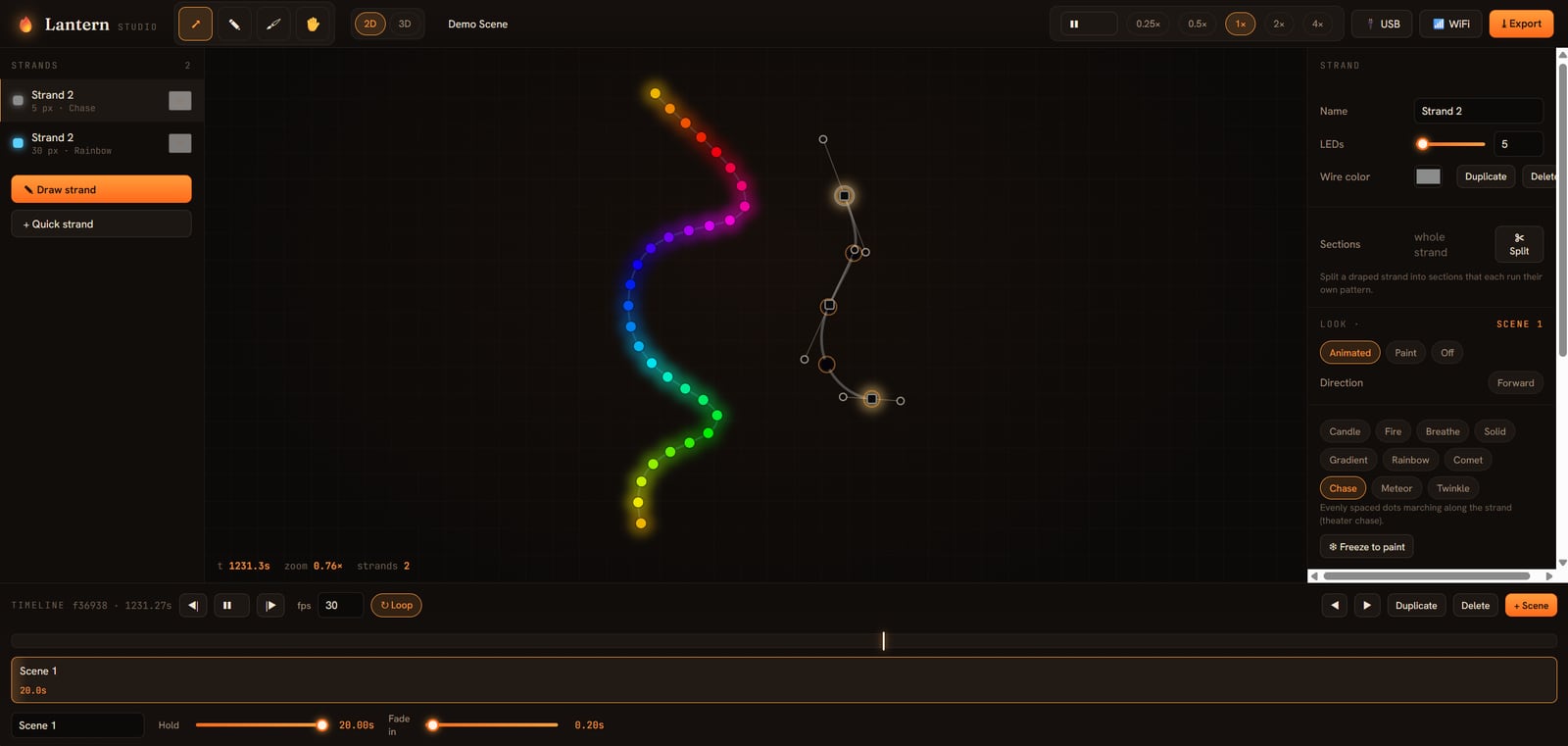
Here is where “small, safe project” stopped being either. Editing the light patterns meant changing code and re-uploading every single time, which is miserable, so I built a little tool to draw the patterns instead. Then the tool grew a 3D preview, so I could see how a strand would actually look draped in my own room before I committed to hanging it. Then it grew a name. Then, somewhere in there, I designed a real circuit board and sent it off to a factory to be made. For two paper lanterns.
One of the lanterns, by pure luck, looks exactly like a Boo, the shy little ghost from Mario. So of course that one had to glow just right.
All I wanted was nicer lights. What I ended up with was the first thing I have ever made that has a circuit in it: a real board, a case, and opinions. I will take it. And for the record, the lights are much nicer.
all Lantern updates