
Biologists do this by clipping tail fur
We spent months looking for something on a raccoon that would hold still enough to identify it by. The tail, the mask, the walk, the size, the hour it shows up. Then I looked up how the professionals do it.
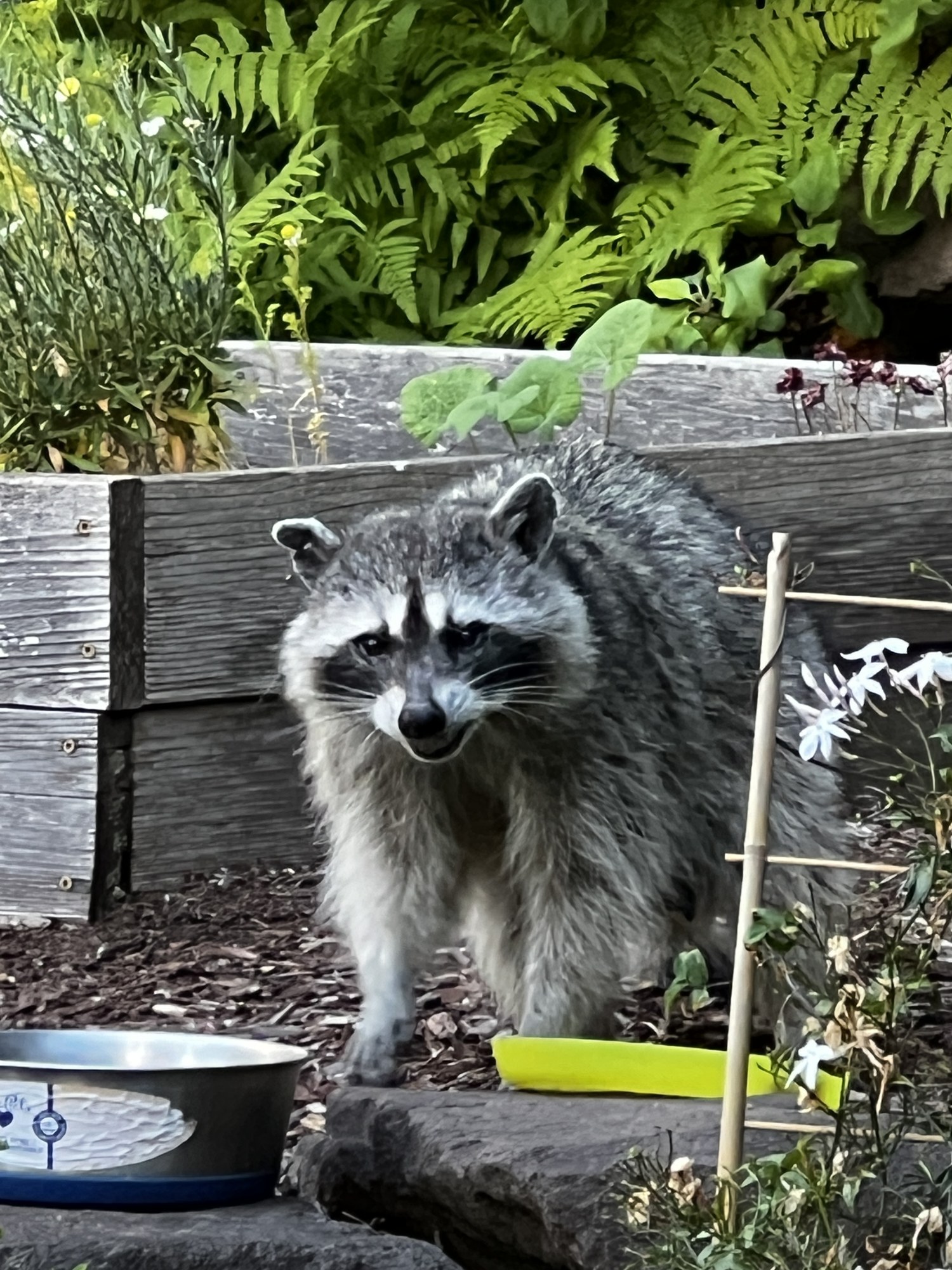
This project exists to tell the raccoons apart, and for most of the summer the software was not doing it. Out of every name sitting on an animal in the database, it had put down about two percent. The rest were mine, clicked in by hand, one visit at a time.
So before changing anything we went looking for a mark that holds still.
The tail. They have those banded tails, and the rings really do look different up close, so tracing them seemed worth a shot. We built something that follows the outline of the animal and reads the bands off it. Then Claude went back and audited what it had actually traced: twenty of the twenty-two it checked were following an ear, or a back leg, or the edge of the face mask bleeding into the dark. An outline tracer cannot reach a tail that is curled up under the animal. The code now deletes the tracer if anybody tries to bring it back, which I appreciate.
The mask. Every raccoon’s face markings sit a bit differently and this felt like the easy one. Their eyes are inside the black mask, though, so there is no edge to find. Dark on dark. A better camera does not fix that, and I spent a while wanting it to.
The walk. You can read a stride off video if you have the frames for it. We get about ten a second, and a raccoon’s stride lands right at the edge of what that can pick up. The estimator resolved a stride on twenty-seven tracks out of twenty-five thousand.
Body size, and what time they turn up. Both came in at chance. Arrival hour is a real difference between them as a group, but for naming one animal it points at the wrong raccoon about half the time.
We checked whether feeding it the sharpest photos helped, since that one looked free. The best forty by picture quality were no better than the worst forty.
The one I broke myself
Somewhere in there I mis-clicked and mixed up Notch and Pedro.
Notch is a chonky male with a clipped ear. Pedro is an elderly mom. Nobody at the window is confusing those two. But the hand labels are what everything else learns from, so it spread, and for weeks afterward the software kept coming back to ask me whether Notch and Pedro might be the same raccoon. It had good reason to ask. It was asking about my mis-click.
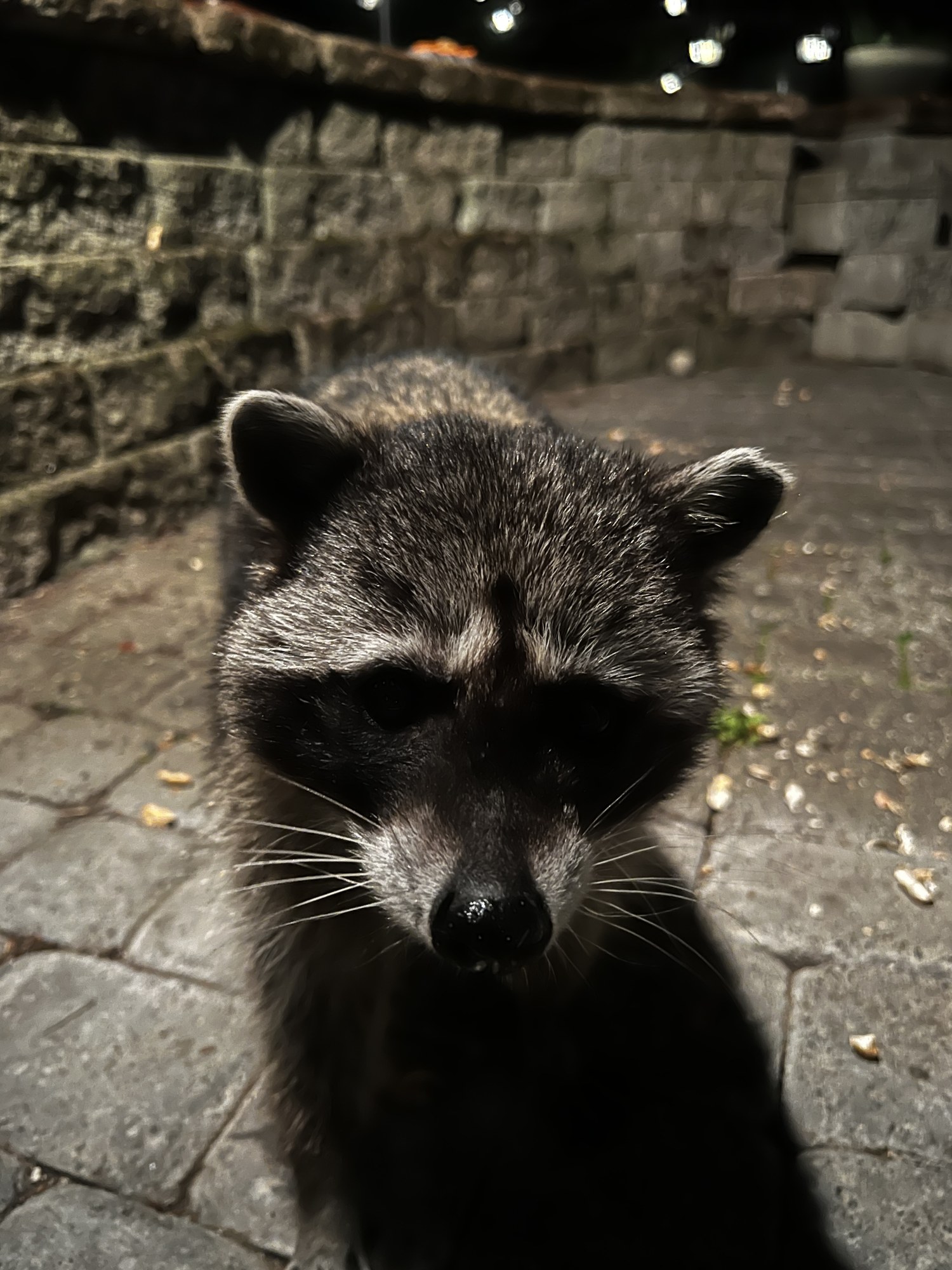
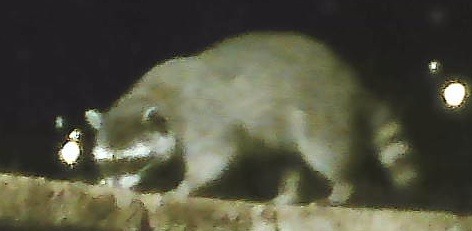
The best shot the rig has ever taken of the same animal, at the size it was saved. 472 pixels across.
How the professionals do it
There is no published work on doing this with raccoons. None on anything in that family. The way biologists tell raccoons apart is by clipping fur off their tails.
The closest thing anyone has written up is a red fox study. One trained person identified about a hundred and sixty-eight thousand records by eye. They needed an average of 877 photographs per fox, they used a different set of features for each individual animal, and they finished by saying an automated system was unlikely to match it.
For animals with no pattern on them, meerkats and polar bears and so on, the best published systems get about half of them right.
The software tells me what species came by, and it is good at that. It tries the individuals too, and it is not great at that just yet. The names are still mine.
all Critter Cam updates