
The barbecue kept getting filed as a rat
On one card, half of what the trail camera caught was furniture. The automatic filter finds some of it by watching what never moves, and I draw boxes around the rest by hand.
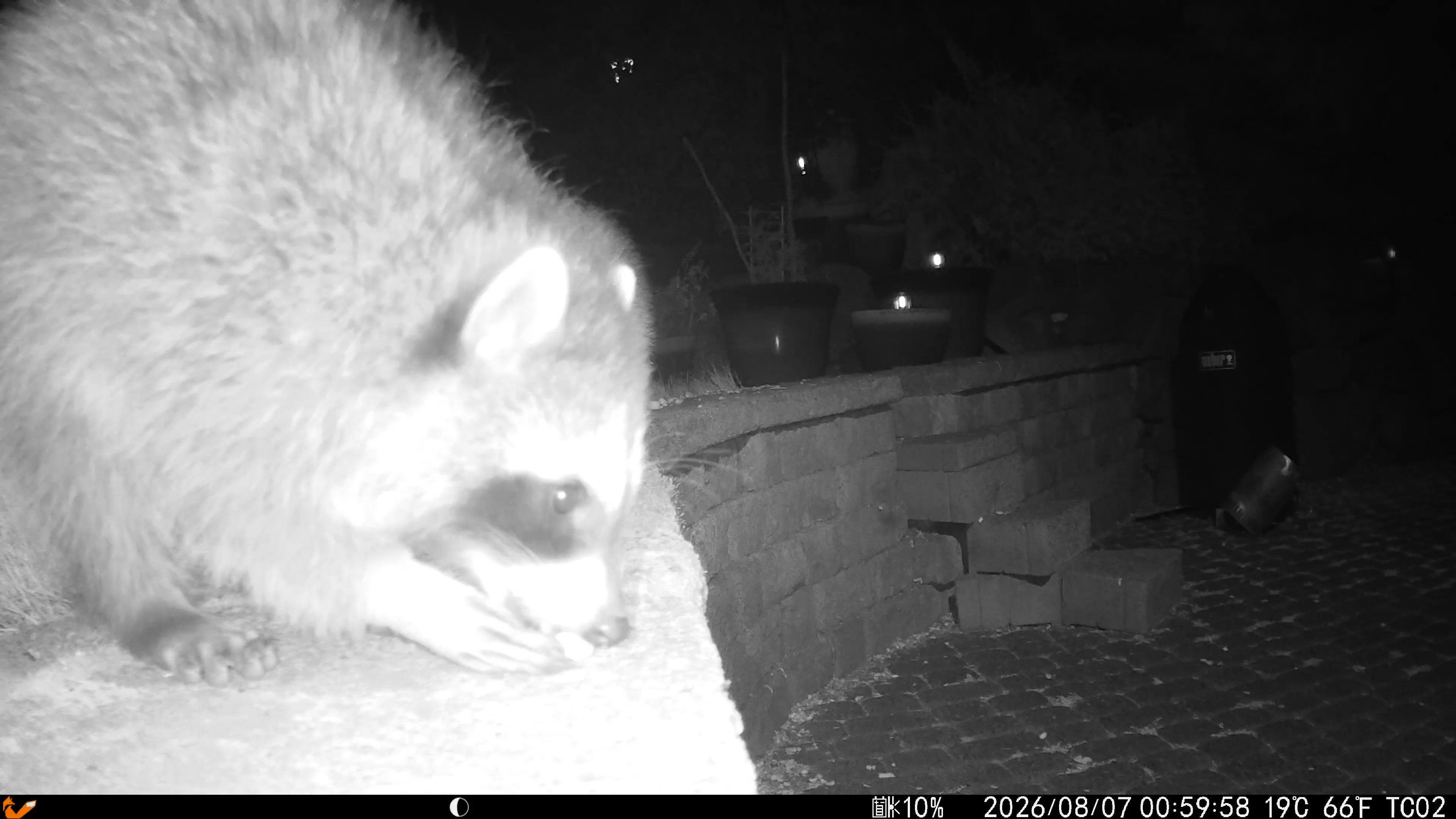
The trail camera runs off a battery and an SD card, so every few days I pull the card and dump it into the system. For a stretch there, every dump came back full of the barbecue. Left and right, all night, every night. Very frustrating.
The classifier had a species picked out for it, too. Brown rat.
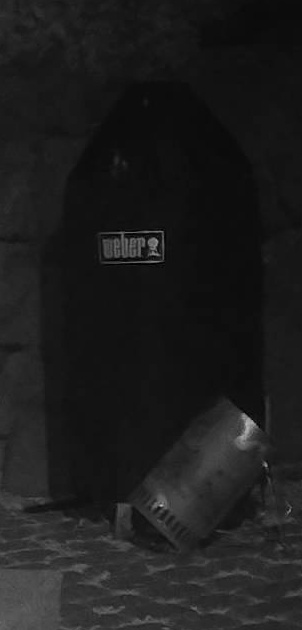
One of the crops it saved, at the size it saved it. You can read the logo.
There are two pieces of software here and neither of them is allowed to say “that is a barbecue.” The first finds animal-shaped things and hands them over. The second gets a dark rounded lump in the dark and has to come back with an animal. A covered Weber looks a lot like a very large rodent.
The grill had company. On one card: the chimney starter next to it, 143 times. A dark gap in the stonework that read as eyeshine, 48. A shrub whose dew caught the infrared and then sat perfectly still from 12:45 in the morning until 3:30, 26 more. 395 of that card’s 789 detections were furniture. All at night. Daylight has never made a barbecue look like an animal.
It cost me more than tidiness. The grill fired so often that it was gluing separate raccoon visits into one long one, because the system decides a visit has ended when nothing has moved for a while and something was always moving. Once the furniture came out, that card’s raccoon visits went from four to eleven.
Two ways at it, and I use both
The automatic one asks how long a thing holds still. Not where it sits, but whether it ever budges. On August 4th the grill held an identical 235 by 486 pixel box for five and a quarter hours across 178 photographs. The busiest actual raccoon on the same card managed 22 minutes and never held one box for two frames running, because an animal changes shape as it goes.
The other one is me, drawing boxes. I pull a fresh snapshot up on the dashboard, drag a rectangle over the spot I want left alone, and the capture thread honours it on its very next frame.
That sounds obvious and it was not always possible. Marking a spot used to mean reading pixel coordinates off junk rows in the database, editing a config file, and restarting the rig, which is why exactly one zone ever got made in all those weeks.
The catch with drawing them by hand is that I move the cameras, and a rectangle drawn on Tuesday will go on faithfully ignoring the patch of ground where the barbecue used to be. It moves by real amounts. Between one card and the next the grill sat 384 pixels further across the frame. So any zone I drew before the camera last shifted now wears a “cam moved” badge telling me to draw it again.
The night the automatic half stopped working
On August 11th the trail cam’s battery died at eleven at night.
A bin, a lamp and the edge of a paver had each been firing for somewhere between 24 and 36 minutes, and then the camera simply stopped. That is under the hour the filter wants before it will call something furniture, so 669 detections went straight through and got names put on them. The bin came out as 272 brown rats. The lamp was a raccoon.
Lowering the threshold does not work, which Claude checked before suggesting it. In that same cycle two actual raccoons sat and foraged in one spot for 23 and 38 minutes, confirmed by eye, clear crops, visibly shifting about between frames. Their numbers sit right inside the furniture’s range. A feeding raccoon sits still.
So there is a second test now, on a different axis. Take a dozen crops from across the life of one of these clusters and compare the worst-matching pair. Rigid furniture is the same pixels each time it fires. An animal that pauses might look similar on average, and then there is a pair where it had moved.
It is deliberately weak, and on that cycle it caught two of the ten spots. The other eight I found by looking at crops.
all Critter Cam updates